
Preparing for college is about more than extra-long sheets and a shower caddy. The summer before your freshman year is a countdown — a short, useful stretch to build the executive function skills that are about to become entirely yours. And here is something worth saying out loud before we start: managing all of this is hard for almost everyone right now, whether or not you have ADHD. If you have ever felt like you are drowning in tabs, reminders, and expectations, you are not broken. You are paying attention to a world that throws a lot at you. The good news is that these are skills, and skills can be learned. This summer is the perfect time to start.
Why This Is Hard for Everyone, ADHD or Not
Executive function skills are the mental tools you use to plan your time, get started on hard things, stay organized, and follow through. Everyone uses them, and no one is born good at them. The reason they feel so hard lately is not a personal failing — it is the environment. You are managing more inputs than any generation before you: a phone that never stops buzzing, endless content, and a dozen people who can reach you at once.
If you have ADHD, these skills tend to come online later and need more direct strategies and support, and that is worth understanding and not something to feel ashamed of. The research from the Harvard Center on the Developing Child is clear that executive function develops over time and can be strengthened with practice. Groups like CHADD and Understood.org have whole libraries of strategies built on the same idea. The tools below help everyone — they are just essential if your brain runs a little hotter.
What Preparing for College Actually Changes
Picture a Tuesday in high school next to a Tuesday in college. In high school, your day is built for you: classes back to back, homework collected, dinner ready, an adult nearby. In college, you might have two classes, a six-hour gap, a reading “due” in two weeks, and total silence about whether you do it.
For eighteen years, a quiet team held the structure together — parents who set the alarm and stocked the fridge, teachers who posted the deadlines, a bell that told you where to be. In college, almost all of that disappears at once, and the job of running a life lands on you. That gap between structure and freedom is where a lot of freshmen stumble, not because they aren’t smart, but because no one ever handed them the controls. Preparing for college means taking those controls early, on purpose, while the stakes are still low.
The Executive Function Skills You’ll Need
A few skills carry most of the weight your first year.
Managing Your Time
College hands you huge blocks of open time and almost no reminders. The skill is turning a syllabus into a plan and protecting your work hours before the day swallows them. If you can look at a class and think “this paper is due in three weeks, so I’ll start the reading this weekend,” you are already ahead of most of your hall.
Asking for Help and Speaking Up
In college, nobody chases you. You email the professor, show up at office hours, and find the writing center yourself. One piece students miss: if you had an IEP or 504 plan in high school, it does not follow you automatically. You have to register with your college’s disability services office on your own to get accommodations. Practicing how to ask for what you need now makes that far less intimidating in the fall.
Running Your Own Life
Sleep, food, laundry, money, and — if you take medication — your own refills are all executive function skills in disguise. They take planning and follow-through, and they trip up more freshmen than any exam. If you already know how to keep yourself fed, rested, and refilled, that is one less thing to figure out during a hard week.
Your Summer Toolkit: Habits and Techniques
These are named, teachable tools. Pick a few and try them on the life you already have this summer.
Time Blocking
Instead of a to-do list, put each task in a specific block of time on your calendar — “read history, 10–11,” not “read history sometime.” Start by blocking your job shifts, workouts, and plans with friends.
Calendar Integrity
This one is simple: everything that matters goes on your calendar, and you do what it says. If it is written for 2:00, you start at 2:00. The skill is learning to follow your own plan even when no one is checking.
Backward Planning
Start at the due date and work back to today, filling in the steps along the way. A paper due in three weeks becomes “outline this weekend, draft next week, revise the week after.” This is how you beat the night-before scramble before it happens.
The Pomodoro Method
Work for 25 minutes, then take a 5-minute break, and repeat. The short timer makes a big task feel survivable and gives a distractible brain a finish line it can see. After four rounds, take a longer break. It is one of the simplest focus tools there is.
Habit Stacking
Attach a new habit to one you already do without thinking. “After I pour my morning coffee, I check my calendar for the day.” “After I sit down at my desk, I write my top three tasks.” Stacking a new habit onto an existing anchor is far easier than building one from scratch.
Body Doubling
Work next to someone — in the same room or on a video call — and notice how much easier it is to start and stay focused. Another person quietly doing their own work pulls your attention back to yours. It is one of the best tools out there, especially with ADHD, and you can practice it this summer over a call with a friend.
Getting Unstuck When You Can’t Start
Starting is the hardest part for a lot of people. A few small tricks lower the hurdle. The five-minute rule: promise yourself just five minutes and let momentum carry you. Eat the frog: do the hardest thing first, before it has all day to grow. If-then planning: decide in advance, “when I finish lunch, I’ll start studying,” so the choice is already made.
Brain Dump and Launch Pad
Your working memory fills up fast, and trying to hold everything in your head is exhausting. Dump it out — onto paper or into an app — so your brain can do the work instead of guarding the list. The analog version is a launch pad: one spot by the door where everything you need for tomorrow lives.
Learning How to Learn
Here is what most students get wrong: they “study” by rereading the chapter and highlighting it in three colors. It feels productive and barely works. The Anti-Boring™ approach we use in executive function coaching, created by Gretchen Wegner, is partly about connecting work to something you care about and partly about studying in ways that stick. University learning centers like the LSU Center for Academic Success teach the same core methods.
Quiz Yourself Instead of Rereading
The single most powerful study move is pulling information out of your memory rather than putting it back in front of your eyes. Close the book and write down or explain everything you remember, then check what you missed. This is called retrieval practice, and it is what makes knowledge stick. Rereading only builds a comfortable familiarity that vanishes the second the test starts.
Space It Out
Studying a little across several days beats one long cram. Spread your sessions out and circle back to older material — your brain holds onto what it has to work to recall. A few short blocks over a week will outperform a five-hour panic the night before.
Read a Book Efficiently
You do not read a textbook the way you read a novel. Preview first: skim the headings, the intro, the summary, and any questions so you know where the chapter is going. Then read with a question in mind and hunt for the answer. After each section, summarize it in your own words before moving on. Slow down for the hard parts and speed up through the rest.
Teach It Back
If you can explain something simply — to a friend or to your phone camera — you understand it. The moment you stumble, you have found exactly the gap to go fix.
Smart Tools and Gear That Help
Used well, a few tools make all of this easier. The point of each one is to keep you in the driver’s seat, not to do your thinking for you.
Knowt
Knowt is a free study app that turns your notes, PDFs, slides, or even lecture videos into flashcards, practice tests, and study guides, with a free spaced-repetition mode. It basically automates “quiz yourself” and “space it out,” which are the two study methods that work best.
NotebookLM
NotebookLM lets you upload your readings and notes, then answers questions using only those sources, builds summaries, and can turn the material into an audio overview you listen to on a walk.
Claude — Study Partner, Not Ghostwriter
Used well, Claude is like a tutor available at 11pm. Ask it to quiz you on a chapter, explain a concept three different ways, or give feedback on a draft you wrote yourself. The line is simple and worth holding: use it to understand your work and check your thinking, never to produce the work for you. Having Claude write your essay or solve your problem set is not studying, and most schools call it cheating. The skill that serves you is using AI to learn faster while the ideas and the words stay yours.
Wispr Flow and Granola
Wispr Flow turns your voice into text anywhere you type — talk out a messy first draft when the blank page won’t budge. Granola is an AI notetaker that turns a lecture into clean notes so you can listen instead of scribbling. One rule for both: check your professor’s policy on recording before you use Granola in class.
Gear Worth Owning
Some of the best focus tools are physical, and they help any overloaded brain — they just get talked about as ADHD gear. Worth packing: noise-cancelling headphones or simple earplugs for a loud dorm; a standalone alarm clock or sunrise light so your phone does not have to live by your bed; a weighted blanket to settle a racing mind at night; a white-noise machine or fan; a visual timer that shows time disappearing, which helps if you lose track of it; and a launch-pad tray or hook by the door. Small things — fidget tools, a good water bottle, a solid desk lamp — settle a restless brain more than you would think.
Protecting Your Focus, Sleep, and Sanity
The tools only work if you protect the basics.
Tame the Phone
Your phone is engineered to win, so do not rely on willpower. Turn off notifications, and when you work, put the phone in another room or in a drawer. An app blocker like Freedom or the Forest app helps when you need a backstop. Single-tasking — one thing at a time — is a skill, and it is worth practicing now.
Protect Your Sleep
Sleep is not a luxury you earn after the work; it is the thing that makes the work possible. It runs your focus, your memory, and your mood. Going to bed and waking up at steady times will do more for your grades than one more hour of tired studying. Keep the phone out of the bed, and let the alarm clock — not the screen — wake you.
When You Fall Behind
You will have a week where it all piles up. Everyone does. When it happens, do not spiral — triage. Write down everything you owe, rank it, email the professor if you need an extension, and start with the next single thing. And know this: every campus has a counseling center, it is free, and using it is a sign of strength, not weakness.
Be Kind to Yourself
You will drop balls, forget tasks, and blow a few time blocks. That is the process, not failure. The students who do well freshman year are rarely the ones who never struggle — they are the ones who fumble, recover, and try the next tool.
Start Building Executive Function Skills This Summer
You do not have to master all of this by August. Pick two or three tools and use them on the life you already have. Ask your parents to start handing things over — own your alarm, book your own appointments, manage your own refills, and run your week on your own calendar. Try a study method on something low-stakes, like quizzing yourself on a book you are reading for fun. A missed shift in July is a cheap way to learn what a missed deadline would cost in October.
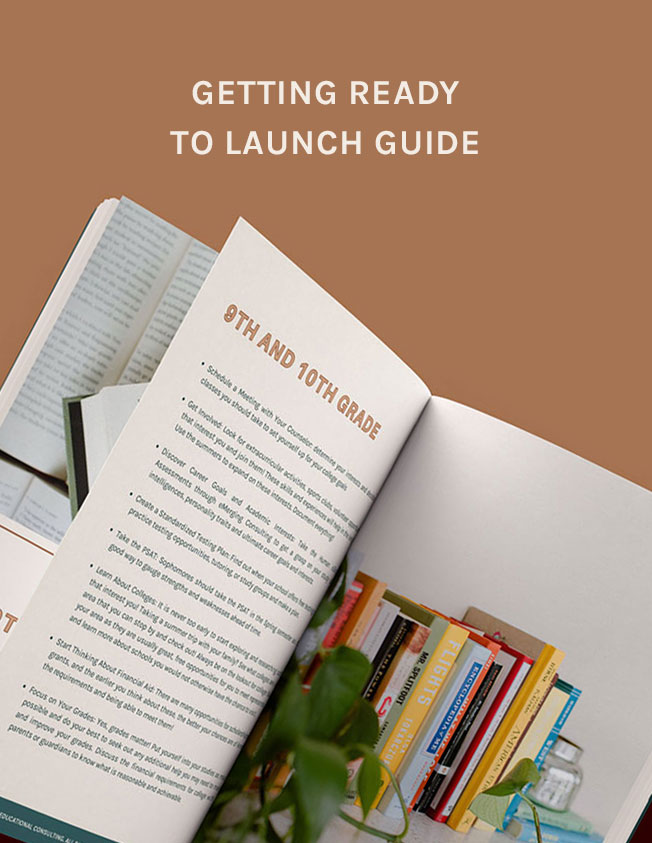
These are a few of our favorites. If you want more, or your family wants support building these executive function skills before the fall, reach out to us. Emerging’s executive function coaching, academic support, and college consulting all start from the same place — meeting your student where they are. Our free Getting Ready to Launch guide also lays out a timeline for every grade. Preparing for college works best when you start small, start now, and give yourself room to grow into it.
Frequently Asked Questions
What are executive function skills, in plain terms?
They are the mental tools you use to plan, start, organize, manage time, and follow through. You already use them every day, and they get stronger with practice and the right strategies, such as time blocking, backward planning, and quizzing yourself.
Do you need executive function skills if you don’t have ADHD?
Yes. These skills help everyone, and the jump from high-school structure to college freedom challenges almost every freshman. A student without ADHD still benefits from learning to time block, plan backward, protect sleep, and study in ways that work.
Is it cheating to use AI like Claude for college?
It depends on how you use it. Using AI to quiz you, explain a concept, or give feedback on your own draft is studying. Having it write your essay or do your problem set is not, and most schools treat that as cheating. Keep the ideas and the words yours.
What is the best way to study in college?
Quiz yourself instead of rereading, and space your studying across several days instead of cramming. Free tools like Knowt and NotebookLM can turn your notes into practice tests automatically, which makes both methods easy to stick with.
How can a rising freshman prepare for college over the summer?
Start handing responsibilities over to yourself now: own your alarm, calendar, appointments, and refills, and practice one or two executive function tools on your summer life. Small, low-stakes reps over the summer build the habits you will lean on in the fall.
About Emerging Educational Consulting
Laura Barr has spent over 30 years helping families navigate education — from school choice to college admissions to executive function coaching. She founded Emerging Educational Consulting on a simple belief: this process should be simple, deliberate, and joyful. Emerging’s team of college consultants and certified EF coaching mentors works with students and families in Denver and nationwide, and our executive function coaching uses the Anti-Boring™ approach to help students build these skills in a way that sticks. Every student gets a customized plan, and every family gets a team genuinely invested in growing good humans. Tell us your story and schedule a consultation.